
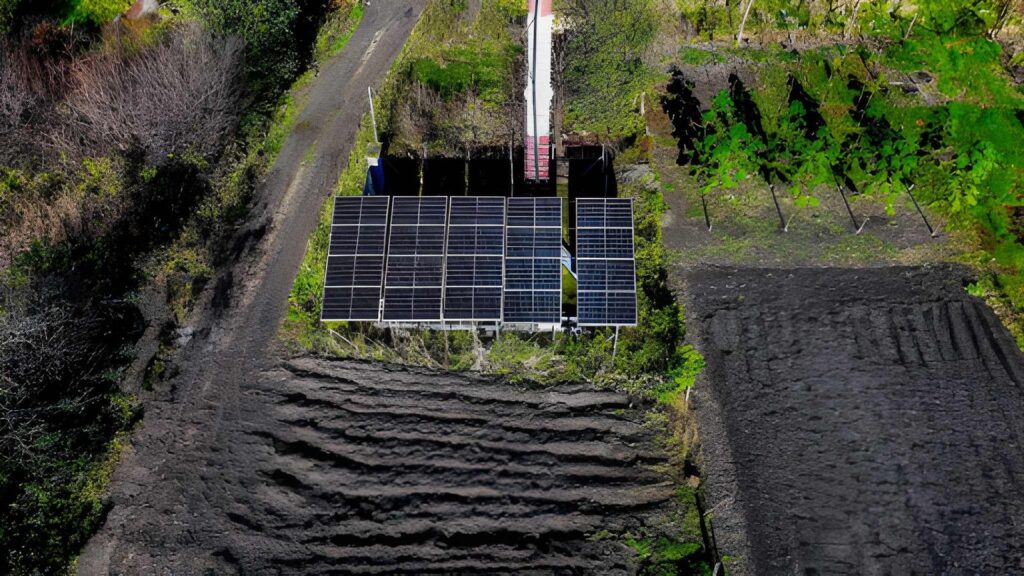
solar pv hog farm philippines design is not the same as residential solar design. Hog farms run critical electrical loads for long hours, and many of those loads overlap with daytime solar production. That makes PV technically suitable for many farms, especially where ventilation and wastewater equipment are major consumers.
This article converts your technical report into a practical web guide. It keeps the core numbers and assumptions you provided: farm load models, Philippine PV yield references, net-metering policy direction, capex assumptions, and scenario economics (grid-tied, hybrid, and off-grid).
Table of Contents
- Executive Takeaways
- Hog Farm Electrical Loads: What Drives Consumption
- Philippine Solar Resource and Yield Assumptions
- Net-Metering and Policy Updates That Matter
- Sizing Method and Representative System Sizes
- Capex and O&M Assumptions
- Payback, NPV, LCOE, and Sensitivity
- Permitting and Interconnection Timeline
- Recommendations by Farm Size
- Procurement and Maintenance Checklist
- FAQ
Executive Takeaways
Hog farms are strong candidates for solar because daytime loads are meaningful and continuous enough to increase self-consumption. In your modeled cases, grid-tied PV sized for daytime farm demand can deliver strong economics. Hybrid and off-grid configurations are technically valid but should be treated differently in financial decision-making.
- Grid-tied PV + net-metering: best first choice for most grid-connected farms, with modeled payback often around 3–5 years under high retail tariffs and bankable EPC pricing.
- Hybrid PV + battery: usually justified by resilience and continuity (ventilation risk, process risk), not by energy savings alone.
- Off-grid: feasible but capital-intensive for 24/7 hog operations; practically a microgrid decision (PV + battery + generator), not PV-only.
For wider power system context, farms can monitor grid reliability in Luzon, because utility-scale additions affect long-term planning confidence for agricultural operators.
Hog Farm Electrical Loads: What Drives Consumption
The most important design point is this: farm solar should be sized from measured electrical behavior, not from headcount alone. Production phase, barn type, ventilation approach, and wastewater process design all change kWh/day and peak kW materially.
In your report assumptions, ventilation is the dominant variable. That is consistent with practical farm operations in hot and humid conditions where cooling and airflow control are persistent needs. Wastewater treatment and circulation can also be large and long-hour loads.
Representative daily load models used in this guide
| Farm Size | Daily Energy | Annual Energy | Peak Demand |
|---|---|---|---|
| Small | ~80 kWh/day | ~29,200 kWh/year | ~15 kW |
| Medium | ~400 kWh/day | ~146,000 kWh/year | ~75 kW |
| Large | ~1,600 kWh/day | ~584,000 kWh/year | ~300 kW |
Why these load shapes help PV economics
If loads are high during 10:00–16:00 (common for ventilation-heavy farms), solar generation offsets retail energy directly. That offset is usually more valuable than exporting excess energy, because exported kWh credits are often lower than full retail value. This is why the design target should be high daytime self-consumption first.
Philippine Solar Resource and Yield Assumptions
Your report uses a base yield of ~1,400 kWh/kWp-year, aligned with DOE-style practical references for Metro Manila examples and national capacity factor ranges. This is a reasonable base case for preliminary engineering economics.
- Base case used: 1,400 kWh/kWp-year
- Low case: ~1,236 kWh/kWp-year
- High case: ~1,786 kWh/kWp-year
- Typical planning reference: around 4.5–5 peak sun hours/day
For final design, replace generic yield assumptions with site-specific output modeling and loss assumptions (shading, soiling, clipping, inverter efficiency, temperature, and seasonal weather pattern).
Net-Metering and Policy Updates That Matter
For most farms, net-metering is the primary mechanism for handling excess daytime PV. In practical terms, it enables export and bill crediting while preserving behind-the-meter self-consumption economics.
Key policy implications from your source set:
- Farm-scale projects often work best when sized to offset daytime farm load before export.
- Credit banking and rollover direction improves value for seasonal export mismatch.
- Policy modernization on REC treatment and multi-site allocation can improve flexibility for multi-account operators.
To align farm planning with current regulatory direction, monitor official updates tied to energy efficiency measures in the Philippines and DU-level implementation procedures.
Sizing Method and Representative System Sizes
Use the same first-pass equation from your report:
Annual PV Energy (kWh/year) = PV Size (kWp) × PV Yield (kWh/kWp-year)
At 1,400 kWh/kWp-year:
- 15 kWp → ~21,000 kWh/year
- 75 kWp → ~105,000 kWh/year
- 100 kWp → ~140,000 kWh/year
- 400 kWp → ~560,000 kWh/year
Scenario sizing matrix from your report assumptions
| Farm Size | Scenario | PV Array | Inverter | Battery | Annual PV Output |
|---|---|---|---|---|---|
| Small | Grid-tied | 15 kWp | 12 kW | 0 | ~21,000 kWh |
| Small | Hybrid | 20 kWp | 15 kW | 50 kWh | ~28,000 kWh |
| Small | Off-grid | 30 kWp | 20 kW | 120 kWh | ~42,000 kWh |
| Medium | Grid-tied | 75 kWp | 60 kW | 0 | ~105,000 kWh |
| Medium | Hybrid | 100 kWp | 75 kW | 250 kWh | ~140,000 kWh |
| Medium | Off-grid | 150 kWp | 100 kW | 600 kWh | ~210,000 kWh |
| Large | Grid-tied (cap-limited case) | 100 kWp | 80 kW | 0 | ~140,000 kWh |
| Large | Hybrid | 400 kWp | 250 kW | 900 kWh | ~560,000 kWh |
| Large | Off-grid | 600 kWp | 400 kW | 2,400 kWh | ~840,000 kWh |
For equipment decision context, you can cross-check vendor-specific market pricing trends such as Sungrow inverter price Philippines before final bid comparison.
Capex and O&M Assumptions
Your report clearly separates assumptions from official tariffs/policy. Keep that same discipline in procurement.
Cost assumptions used
- Grid-tied PV installed: ~₱55,000/kWp
- Off-grid PV installed: ~₱60,000/kWp
- Installed battery system: ~₱25,200/kWh (~$450/kWh equivalent full system assumption)
- O&M: PV at ~1.5% of PV capex/year
- O&M: Battery at ~1% of battery capex/year
- FX in model: ₱56 = $1
Estimated capex and annual O&M summary
| Farm Size | Scenario | Estimated Capex (PHP) | Estimated Annual O&M (PHP) |
|---|---|---|---|
| Small | Grid-tied | ~825,000 | ~12,400 |
| Small | Hybrid | ~2,615,000 | ~30,000 |
| Small | Off-grid | ~5,600,000 | ~140,000 (with diesel allowance) |
| Medium | Grid-tied | ~4,125,000 | ~61,900 |
| Medium | Hybrid | ~13,300,000 | ~150,000 |
| Medium | Off-grid | ~28,000,000 | ~707,000 (with diesel allowance) |
| Large | Grid-tied (cap-limited case) | ~5,500,000 | ~82,500 |
| Large | Hybrid | ~49,100,000 | ~557,000 |
| Large | Off-grid | ~114,000,000 | ~2,780,000 (with diesel allowance) |
Payback, NPV, LCOE, and Sensitivity
Base financial frame in your report:
- Retail value proxy: ~₱13.8/kWh
- Export credit proxy: ~₱7.9/kWh
- Discount rate: 8%
- Horizon: 10 years
Modeled results summary
| Farm Size | Scenario | Simple Payback | NPV (10-year, 8%) | LCOE (10-year) |
|---|---|---|---|---|
| Small | Grid-tied | ~3.3 years | ~+875,000 PHP | ~6.4 PHP/kWh |
| Small | Hybrid | ~7.7 years | ~−335,000 PHP | ~15.0 PHP/kWh |
| Medium | Grid-tied | ~3.3 years | ~+4,360,000 PHP | ~6.5 PHP/kWh |
| Medium | Hybrid | ~7.8 years | ~−1,900,000 PHP | ~15.2 PHP/kWh |
| Large | Grid-tied (cap-limited case) | ~3.1 years | ~+6,360,000 PHP | ~6.5 PHP/kWh |
| Large | Hybrid | ~7.2 years | ~−3,100,000 PHP | ~14.0 PHP/kWh |
Interpretation without fluff
- PV-only behind-the-meter is the strongest economic baseline in your models.
- Battery economics are weak if judged by kWh savings alone.
- Battery value improves only when outage-cost avoidance is explicitly monetized.
- Off-grid systems remain expensive because 24/7 operation requires large storage and backup fuel strategy.
Sensitivity points from your model
- Tariff sensitivity: at lower grid tariffs, payback extends; at higher tariffs, payback improves quickly.
- Battery cost sensitivity: large battery capex reductions are needed to approach PV-only financial performance.
- Diesel sensitivity (off-grid): higher diesel cost helps off-grid economics, but high capex still dominates.
Utility-scale solar growth trends, including floating solar projects in the Philippines, support the long-term direction of lower-carbon supply, but farm-level decisions should still be made from site-specific economics and reliability needs.
Permitting and Interconnection Timeline
Your process framing is correct: schedule risk is often in permitting and interconnection, not in module mounting itself.
Typical flow
- Data capture (12–24 months bills + load logging): 2–4 weeks
- Preliminary design and financial model: ~2 weeks
- EPC bid and technical-commercial evaluation: 2–4 weeks
- LGU permits and DU interconnection process: ~3–8 weeks (variable)
- Procurement, installation, testing, and commissioning: 4–8 weeks
Recent streamlining direction is favorable, but actual speed still depends on DU queue, feeder conditions, and document quality.
Recommendations by Farm Size
Small Farm (~80 kWh/day)
Start with 15–20 kWp grid-tied PV. Keep generator-ready backup for critical ventilation. Add small battery only if outage history and welfare risk justify it.
Medium Farm (~400 kWh/day)
Use 75–100 kWp PV centered on daytime fan and wastewater loads. If outages are costly, size battery for critical circuits only (not full-farm autonomy).
Large Farm (~1,600 kWh/day)
Use a staged strategy: maximize behind-the-meter self-consumption, apply net-metering where applicable, and evaluate hybrid microgrid architecture where outage risk is operationally unacceptable.
For related planning references, your internal hubs remain relevant: DIY Solar Setup Builder, Solar Components, Solar Live Map, Energy News, Solar Blog.
Procurement and Maintenance Checklist
Procurement checklist
- Collect 12–24 months of bills and outage records.
- Log critical loads (fans, wastewater, pumps) during hot-season weeks.
- Run shading and structural checks before final EPC award.
- Confirm service entrance capacity and interconnection constraints early.
- Request at least three EPC bids with identical scope.
- Lock assumptions: yield, losses, curtailment risk, degradation, tariff treatment.
- Verify warranties: inverter serviceability, battery throughput/cycle terms, workmanship.
O&M schedule
- Weekly: alarm review, visual inspection, critical circuit status check.
- Monthly: cleaning decision based on visible soiling and monitoring trend.
- Quarterly: electrical checks, performance analytics, abnormal load investigation.
- Annually: preventive inspection, grounding/protection checks, billing-credit reconciliation.
Final Decision Rule
If your top priority is cost per kWh and payback, start with PV-only. If your top priority is continuity of animal-critical operations during outages, budget for hybrid resilience and size storage only for critical loads.
Do not size by headcount alone. Size by measured load profile, outage cost, and interconnection constraints.
FAQ
Is solar PV technically suitable for Philippine hog farms?
Yes. Many farm loads align with daytime generation, improving self-consumption and project value.
What usually gives the best ROI?
Grid-tied PV sized to daytime farm loads typically gives the best financial return in your modeled scenarios.
When should a farm add battery storage?
Add battery when outage risk is costly for ventilation, water, controls, and welfare outcomes. Treat it as resilience investment.
Is off-grid recommended for most hog farms?
Usually no for grid-connected farms. Off-grid is feasible but capital-intensive and generally needs generator support for reliability.
What is the biggest practical mistake in project development?
Skipping real load logging and relying only on generic assumptions. Metered data should drive final design.